








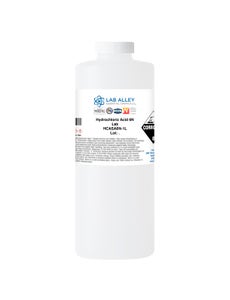
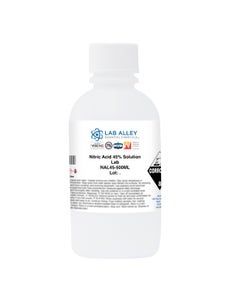
In water, an acid hands off hydrogen ions (protons), and pH goes down. How easily it lets go of those protons is really the dividing line between strong and weak acids, and it's worth knowing which side you're on before you open the bottle.
Hydrochloric, nitric and sulfuric acid are the strong ones we carry. They ionize almost completely, which is why they top every strong acids list. Acetic, citric, lactic and phosphoric acid are weak. They only partly ionize, and that makes them easier to dose and control in food, cosmetics and buffers.
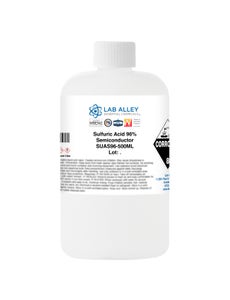
Weak, by the way, is a chemistry term, not a safety rating. Hydrofluoric acid counts as weak, and it's still one of the most dangerous things you can have in a lab, because fluoride moves through skin and goes after tissue and bone. Nitric acid brings a different problem: it's also a strong oxidizer. Concentrated sulfuric acid is so hungry for water it will char paper or sugar on contact.
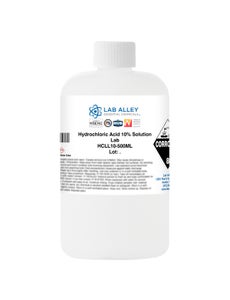
Concentration changes everything too. Concentrated 37% hydrochloric acid works out to roughly 12 molar, and 96% sulfuric acid is close to 18 molar. Hence the diluted and standardized solutions on this page. And the old rule still stands, every time: acid goes into water, never the other way round.